


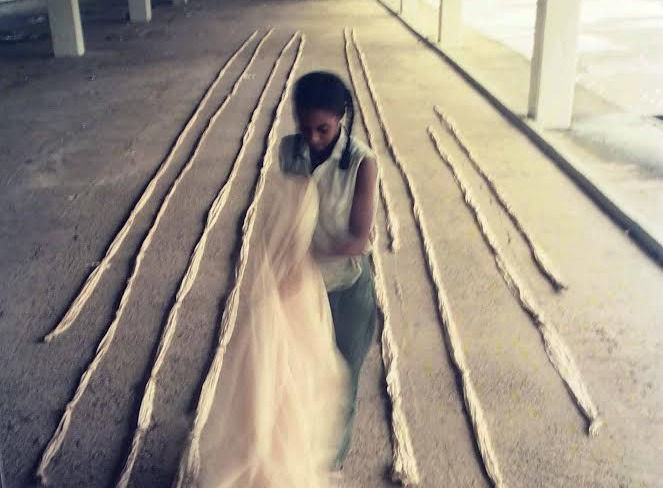


Doors and Passageways of Return Exhibition
Doors and Passageways of Return Exhibition
In 1997 Muhsana was granted a Fulbright Fellowship to research traditional and contemporary African art and to produce an exhibition based on that research. She traveled to a number of countries primarily by road, which included Senegal, Ghana, Togo, Côte d’Ivoire, Mali, Burkina Faso and South Africa. She chose to produce her exhibition in Cote d’Ivoire. Inspired primarily by the traditional spiritually charged doors of the Dogon people of Mali, and the infamous Doors of No Return which she encountered at the slave ports of Senegal and Ghana, Muhsana chose the Doors and Passageways of Return as the theme for her exhibition. As a descendent of the enslaved, the exhibition represented her own symbolic return through the “doors of no return.” her exhibition consisted of ten monumental sculptures and installations also serving as a symbolic meeting place for the peoples separated through slavery.
In her search for an exhibition space outside of the traditional gallery settings, she encountered “Le Chateau”, the dwelling place of a gang of homeless teens, a group of over 40 young men, drug-addicted and prone to violence, rotating between the home they had made there and the prison.
Muhsana negotiated with the youth for permission to install her studio and to eventually mount her exhibition there. This project evolved over a period of two years during which time the youth assisted Muhsana, whom they respectfully referred to as “Auntie” in the creation of her work. She, in turn, trained a number of them in art and literacy skills. Her unexpected involvement with the youth included many unexpected encounters with the police, providing them with health care, and even the burial of one of the boys who was killed at the tender age of 16. In 1999, she mounted the exhibition, Portes et Passages du Retour (Doors and Passageways of Return) during which time all of the youth became involved serving as either security guards, maintenance or tour guides for the exhibition. Those who had trained with Muhsana exhibited their own work as well for the duration of her show.
In 2000, Muhsana formed a non-profit organization in the U.S. entitled Doors and Passageways of Return Foundation. The objective of this organization was to eventually build a rural art center in Cote d’Ivoire that would remove the youth from their wretched conditions. The foundation was able to produce a documentary video which enabled the artists among the youth to continue their practice. However, Côte d'Ivoire escalated into a civil war by 2002, which halted the advancement of Muhsana’s plans.
In 2002, she wed artist, Kan-si and relocated to Senegal. The two artists continued the development of the Foundation;s work by creating a sister association entitled Portes et Passages du Retour.
The association created the rural art center in Mbodiene, Senegal. Muhsana was eventually able to send for her most loyal and dedicated student amongst the Ivorian youth, Gilbert Medeton, who joined the association for several years while he developed his own carpentry and furniture design skills. He eventually returned to Cote d'Ivoire armed with a capacity to provide for himself.
ONLINE VIDEO LINK: https://www.youtube.com/watch?v=zb8vavO-mfw